Every few months, a new game launches with the kind of player numbers that suggest it might reshape the online gaming landscape. Forums fill up, Discord servers form, content creators pivot their channels, and for a period, it feels like the game is everywhere. Then, gradually or abruptly, the population contracts. The Discord quiets. The forums slow. Players disperse to other things.
Sometimes this is simply the natural lifecycle of a product that served its purpose well. But often the contraction reflects something preventable — a failure of community infrastructure, a design decision that didn't account for long-term player relationships, or a moderation approach that allowed the environment to sour before meaningful numbers had formed.
The gaming communities that persist — some for more than two decades — share identifiable characteristics that aren't accidental. Understanding those characteristics is useful both for developers thinking about community design and for players thinking about where to invest their time and energy.
The Difference Between an Audience and a Community
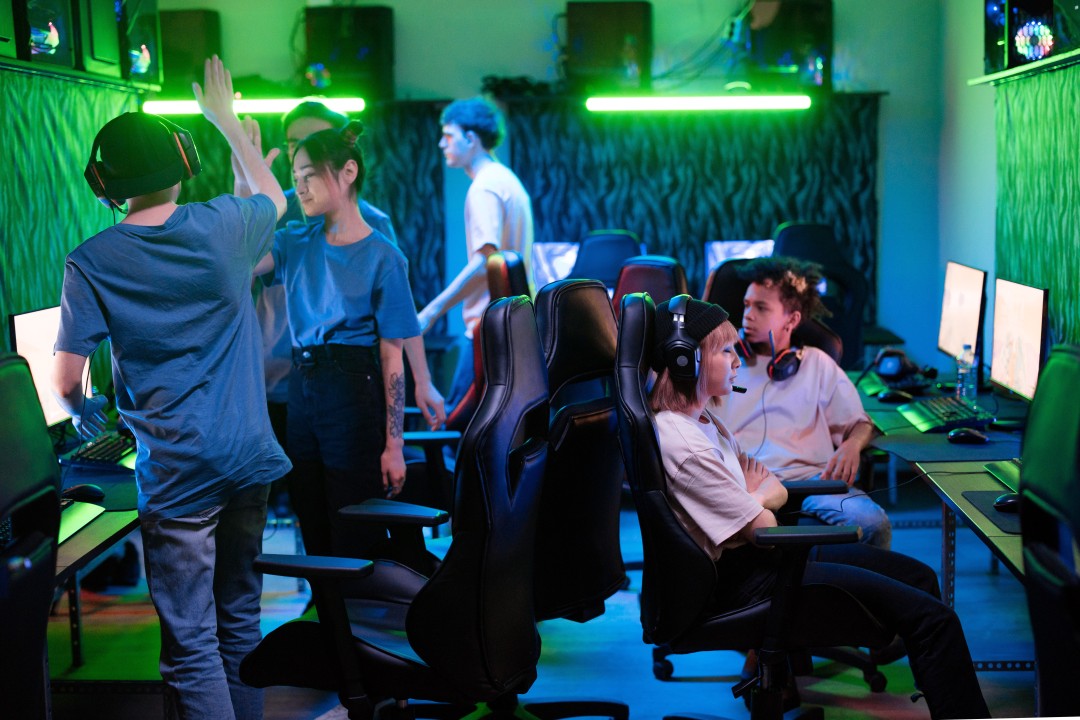
The first distinction worth drawing is between a player audience and a genuine community. A game can have millions of concurrent users without any meaningful community structure. Players might interact with the game's systems extensively while interacting with each other minimally or only transactionally — competing in matches, completing transactions, passing in lobbies.
A community involves something more: shared identity, accumulated history, norms of interaction that members recognise and enforce informally, and a sense that the group itself has value beyond the immediate activity it organises around. Members of a genuine community will continue engaging with each other even when the primary game or platform that brought them together changes significantly or disappears.
The distinction matters practically because the things that build audience — highly polished onboarding, viral content loops, aggressive marketing — are not the same as the things that build community. A game can excel at driving initial adoption and fail entirely at fostering the kinds of lasting connections that sustain communities over time. The metrics look identical in the first month and diverge sharply in the second year.
A game can have millions of concurrent users without any meaningful community structure. Players might interact with the game's systems extensively while interacting with each other minimally.
Shared Stakes and Collective Identity
Communities form and persist when members feel they have genuine stakes in what happens to the group. In gaming contexts, this can take many forms: competitive stakes (wanting a ranked environment to remain fair and active), creative stakes (wanting a modding community to keep producing), social stakes (wanting specific relationships and friendships to continue), or reputational stakes (wanting a community associated with certain standards of play or discourse to maintain those standards).
When players have no stake in the community as an entity — when the game could be replaced by any other game providing similar moment-to-moment stimulation without meaningful loss — community formation is minimal. This is not necessarily a failure, but it does mean the community is more accurately described as a temporary aggregation of individual players rather than a social structure with its own properties.
Games that enable genuine community formation tend to create conditions for collective identity to develop. This doesn't require particularly elaborate systems. A shared vocabulary of in-jokes, memorable moments, or references to significant events in the game's history is often enough. The longer a game runs and the more significant events it accumulates, the more material exists for that shared identity to draw upon. New players joining an established community inherit this history, even when they weren't present for it.

Moderation as Community Infrastructure
Nothing degrades online communities faster than inadequate moderation. This observation has become almost tedious in discussions of digital spaces, but it bears repeating because the gap between platforms that understand it and those that don't remains significant.
Moderation is not primarily about content removal. It is about norm maintenance. The goal is not to eliminate every objectionable interaction but to make clear, through consistent response, what kinds of behaviour the community permits and what it doesn't. When moderation is absent or inconsistently applied, the effective norms become whatever behaviour goes unchallenged. In competitive gaming spaces, that often means the community's effective norms are set by its least considerate members.
Good moderation is also proportionate and transparent. Users who understand why a decision was made are more likely to accept it, even when they disagree with it, than users who face unexplained enforcement. Published community guidelines that moderators actually apply consistently — rather than guidelines that exist nominally while enforcement follows different undisclosed criteria — build the kind of trust that makes moderation sustainable.
The size and resourcing of moderation teams matters enormously. Communities that rely primarily on volunteer moderators without institutional support tend to experience moderator burnout, inconsistent enforcement, and the accumulation of backlogs that make genuine moderation impossible. Developer-side moderation that treats community management as a cost centre rather than an investment in platform health generally produces the community health outcomes one might predict.
The Role of Subgroups and Decentralisation
Large monolithic communities are generally less cohesive than networks of smaller subgroups. This is not counterintuitive if you consider how social ties form: people form meaningful connections with individuals they interact with regularly in contexts small enough that their contributions register. In a community of ten thousand, most members are effectively invisible to most other members. In a subgroup of fifty — a guild, a clan, a regional server, a content creation circle — individuals can form the kinds of ongoing relationships that give community membership genuine value.
Games and platforms that support this kind of decentralisation — that provide tools for subgroup formation and give those subgroups meaningful internal structure — tend to produce more durable communities than those that funnel all interaction through a single undifferentiated space. The MMO genre has historically understood this: guild systems, server communities, and role-specific social structures have been part of the design vocabulary of successful massively multiplayer games for decades.
External community spaces — subreddits, Discord servers, fan wikis, social media accounts — often serve this decentralising function even when the game itself doesn't explicitly support it. The most durable game communities typically have robust external community infrastructure that operates with some independence from the publisher or developer. When the official game changes direction, is acquired, or eventually shuts down, these external communities can persist and sometimes migrate together to successor games or simply continue as social entities organised around shared history.
Developer Relationships with Community
The relationship between a game's developers and its community is one of the most variable factors in community health. Developers who communicate openly about their decisions — explaining reasoning, acknowledging when they got things wrong, and treating community feedback as genuinely informative rather than noise to be managed — tend to maintain the kind of trust that sustains communities through difficult periods.
The opposite approach, in which community concerns are addressed through polished PR responses that don't engage substantively with the underlying issue, tends to accelerate the erosion of trust in ways that are difficult to reverse. Communities have long memories. A single episode of developer dishonesty or contempt for player feedback can permanently alter how a community relates to the people making decisions about the game they care about.
This is not an argument that developers should be captured by whatever faction of the community is loudest at any given moment. Community vocal minorities frequently advocate for changes that would worsen experience for the majority of players. Developers have information, design priorities, and commercial considerations that don't always align with community preferences. The point is that honest engagement — explaining why a decision was made, acknowledging tradeoffs, and demonstrating that community input was actually considered — is different from performative engagement that gives the impression of responsiveness without the substance.
Inclusion and the Long-term Health of Communities
Communities that exclude or make unwelcoming significant portions of the potential player population are limiting their own long-term viability as much as they are failing on ethical grounds. The two arguments converge: a community that tolerates hostility toward new players, women, LGBTQ+ players, players from certain backgrounds, or players at different skill levels is artificially constraining its own membership and accelerating the demographic concentration that tends to precede community decline.
This is not a framing that everyone in gaming spaces accepts, and the debate about what constitutes appropriate inclusivity efforts is genuinely contested. But the empirical observation — that communities which develop cultures hostile to particular groups tend to become less diverse and eventually smaller — is relatively well-supported by the history of gaming communities over the past twenty years.
Inclusion-oriented community design doesn't require treating all players identically. Different players have genuinely different needs and preferences. What it requires is that community norms don't treat any category of player's participation as inherently less legitimate or valuable.
What Enduring Communities Look Like
The gaming communities that have survived decade-long community lifecycles — EverQuest guilds, Counter-Strike communities, fan groups around games that haven't received updates in years — share a recognisable profile. They have developed identities that partially transcend the game itself. They have moderation norms that members enforce informally as well as formally. They have subgroup structures that allow meaningful individual relationships to form. They have accumulated shared history that new members can learn and draw upon.
Some of these communities exist now primarily as social structures that happen to occasionally play games together, rather than as communities organised primarily around gaming. The games were the initial context, but the relationships are the reason people continue to show up. That transition — from game-first community to relationship-first community — is probably the most reliable indicator that something genuinely durable has formed.
For developers and platform builders, the implications are practical: community sustainability requires investment in the infrastructure and governance that allows genuine relationships to form and persist. That investment is harder to attribute to a specific quarterly metric than the investments that drive initial player acquisition, which is probably why it remains underprioritised relative to its importance.

Priya Nathaniel is Community Director at Clyvento. Her background in social work informs her approach to online community design, moderation standards, and the ethics of digital social spaces.